Chris Jones here. Families ask this more than they used to: can Mom and Dad share one urn? Short answer, often yes. How you do it, and who is willing to help, is the longer story.
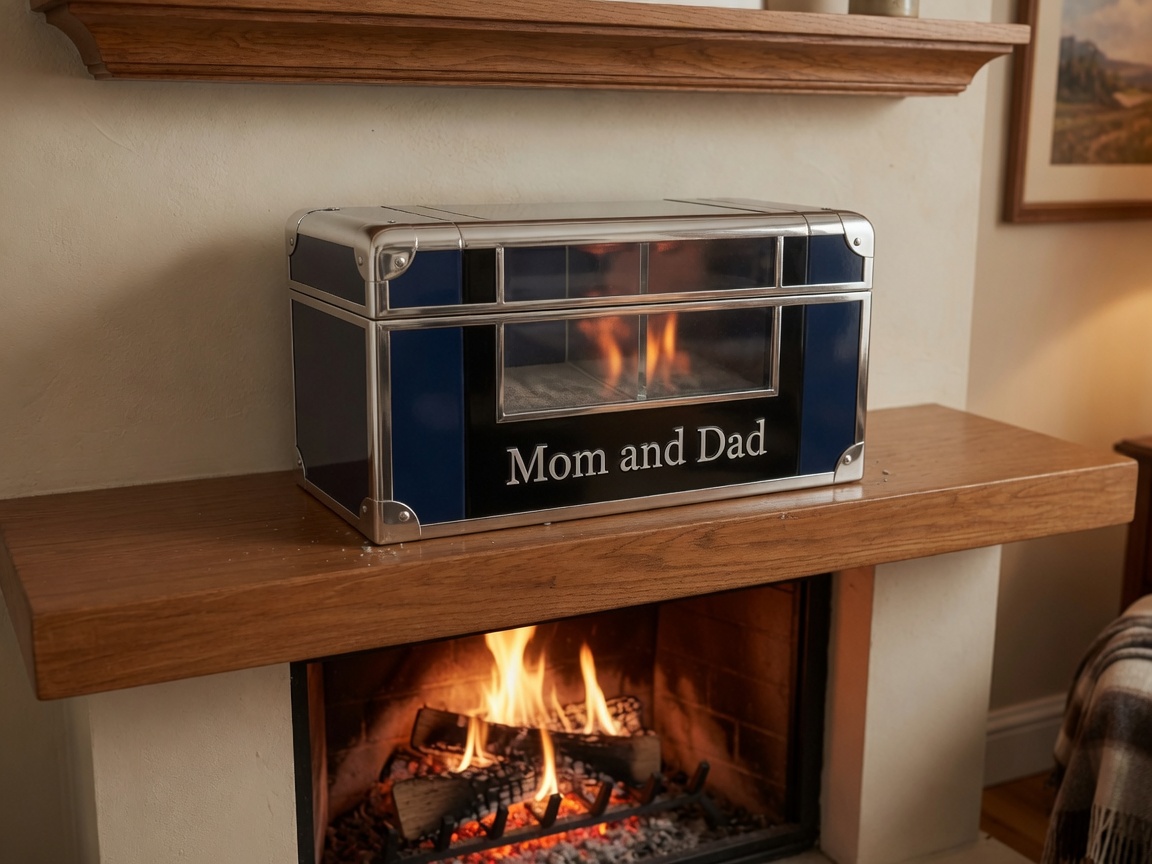
Two compartments, or one
A companion urn is built for two people. Most hold about twice a standard adult urn, often in the 350 to 400 cubic inch range. You will see two designs.
Two compartments. A divider keeps the ashes apart inside one vessel. Each person has a side. If a sibling later wants a small keepsake portion, or a cemetery asks that remains stay identified, you still can. Many couples like this: together on the shelf, still themselves.
One shared chamber. The ashes are placed in the same inner space. Some families pour the two bags together (commingling). Others set the two sealed bags side by side and never mix them. One chamber is the stronger symbol. It is also harder to undo. If there is any chance someone will want a portion later, two compartments are the calmer choice.
Is it legal?
In the United States there is no federal ban on mixing cremated remains of two people, and it is a common practice. Once a funeral home has released the ashes to the family, they are generally treated as the family’s to place. That is not the same as a blank check everywhere.
Cemeteries and columbariums set their own size and material rules. A companion urn is larger. Measure the niche or plot before you buy. Some religious traditions prefer the remains stay separate. The Catholic practice for inurnment, for example, has not treated commingling as the norm; a divider inside one urn is the usual workaround. Other countries write different statutes. France, for one, has treated gathering two people’s ashes in a single urn as not allowed. If you are not in the U.S., ask locally.
This page is not legal advice. If the urn will be buried or placed in a niche, call the cemetery. If faith matters in your family, call the pastor, priest, rabbi, or imam before you mix anything.
Why a funeral home may hesitate
Some funeral homes will place both bags in a companion urn you bring them. The FTC Funeral Rule says they have to let you use a container you bought elsewhere. Mixing the ashes themselves is a different request. Staff may worry about identification, their license, a later family dispute, or a religious policy of the firm. They can say no to the mixing and still be within their rights.
If they hesitate, ask what they will do: set two bags in two chambers, or hand the remains back so you can finish at home. Get it in writing. You do not have to argue theology in the arrangement office.
Doing it at home
After the ashes are released, many families do this at the kitchen table. For two compartments, put each person’s bag in its chamber, close the lids, and stop. For one chamber without mixing, the bags can sit side by side. To commingle, one bag is opened and the other is poured in, then that combined bag goes into the urn. Work over a tray. No rush. This is not a medical procedure. It is a household task with a lot of feeling attached.
If that feels like too much the same week as the funeral, wait. The first parent can rest in a temporary container until the second death, then you move both into the companion urn. The urn does not have to be filled on day one.
Family concerns
Adult children do not always agree. One wants Mom and Dad mixed. One wants them left apart. One wants a share scattered at the lake. Talk before anyone opens a bag. If there is a will or a prepaid funeral instruction, follow that. If there is not, two compartments plus a few keepsake vials often keep the peace. Once ashes are mixed, you cannot sort them back into Mom and Dad.
Pets, later spouses, and “Dad always said he wanted to be with the dog” belong in that same conversation. Do not surprise the rest of the family.
The point of it
The positive is simple. Mom and Dad are together forever, in the room where the fire is going, on a shelf the grandkids walk past. One object. Two lives. You are not required to mix them for that to be true. A divider still says they shared a house, a name, and a long stretch of years.
If you want the full obituary on the same site that will still be here when those grandkids search the names, that is what we do. Call me at 518.223.6044, or submit the obituary here.